
Airbnb Occupancy Rate in Marseille, France, Data & Trends 2026
Curious about the performance of short-term rentals in Marseille, France? Over the last year, the average occupancy rate was 64% with an average nightly price (ADR) of 96€. Hosts earned on average 1713€ per month.

📩 Send me this report and get it in my inbox every month
90-day occupancy forecast for Marseille so you can update rates and stay ahead of competitors.
Market summary in Marseille
Key metrics to optimize your pricing strategy
Avg. monthly earnings
1713€
$1559 USD
YoY Revenue Change
3%
vs. previous year
Occupancy Rate
64%
~19 days/month
Average Daily Rate
96€
$87 USD
Seasonality Index
95%
demand variation
Best Months
August, July
peak season
Worst Months
January, December
low season
Revenue Management in Marseille
Our AI-powered platform automatically optimizes your rates. Maximize your revenue with intelligent dynamic pricing.
What Marseille's occupancy and nightly prices actually mean
Over the June 2025 to May 2026 analysis period, Marseille ran 64% average occupancy, a few points above the national average of about 61% across the thirteen French cities we track, equal to roughly 231 booked nights a year. Where the city sits below the country is on rate: its ADR of 94 EUR is well under the 148 EUR national average, reflecting Marseille's value-market profile versus the high-rate Riviera and Alpine towns, and that flows through to average monthly revenue of 1,676 EUR.
Year-on-year revenue was essentially flat at +1%, a stable, healthy picture against a national backdrop where several French cities slipped and Paris fell sharply on regulatory pressure. The seasonality index of 90 confirms a relatively even earning curve. The practical read: Marseille is a high-occupancy, modest-rate, low-volatility market where returns come from keeping the unit full across the long spring-to-autumn window, not from charging Riviera nightly prices.
Monthly Airbnb occupancy in Marseille
Average occupancy rate by month in Marseille, compared with the same month a year earlier.
| Month | Occupancy | Prior year |
|---|---|---|
| Oct 2025 | 66.7% | 64.3% |
| Nov 2025 | 49.9% | 43.6% |
| Dec 2025 | 52.9% | 52% |
| Jan 2026 | 45.2% | 45.2% |
| Feb 2026 | 57.8% | 60.1% |
| Mar 2026 | 60.9% | 58.1% |
| Apr 2026 | 74.4% | 73% |
| May 2026 | 70.4% | 66.4% |
| Jun 2026 | 62% | 61.8% |
| Jul 2026 | 68.7% | 67.9% |
| Aug 2026 | 80% | 81.5% |
Historical Airbnb occupancy in Marseille (last 12 months)
📌 Historical trends reveal seasonal highs – plan accordingly.
Airbnb occupancy forecast in Marseille (next 90 days)
These figures reflect real-time demand in Marseille, helping you plan and price strategically.
Why people book Airbnbs in Marseille
Marseille is France's second-largest city and a Mediterranean port that draws a different visitor mix from the Riviera resorts up the coast. Guests come for a working-city-meets-beach blend: the Vieux-Port fish market and quaysides, Notre-Dame de la Garde looking down from its hill, the MuCEM at the harbour mouth, boat trips to the Château d'If, and above all the Calanques National Park, the limestone coves stretching toward Cassis that pull hikers, swimmers and divers all summer. Cruise traffic is heavy, with millions of passengers landing each year, and the city also sees steady leisure, weekend and business demand thanks to its TGV link to Paris and the Euroméditerranée business district.
For rental managers this means demand is broad but value-led rather than luxury-led. Compared with Nice, Cannes or Cassis nearby, Marseille rents at far lower nightly rates and attracts more domestic French travellers, backpackers and younger groups using the city as a Calanques and Provence base. Occupancy is solid and year-round-ish, but the market rewards volume and good turnaround far more than premium pricing.
When Airbnb demand peaks in Marseille
Marseille's strongest months are August and July, when Mediterranean heat (28-30C), school holidays and full Calanques access put the city at its busiest. The shoulder months of May, June and September are the sweet spot for managers: warm, dry, still good Calanques weather, and lifted by the Mediterranean Season cultural programme, which in 2026 runs roughly 15 May to 31 October with a flagship opening run of events 15-24 May. The sailing calendar (Calanques Classique regattas, the Baticup Mediterranee on 12-13 September 2026) adds further mid-season nights.
The clear low season is winter. January and December are the softest months in the data, when cold, shorter days and a closed beach season thin out leisure demand and only the business and TGV-driven base travel remains. Marseille's seasonality index of 90 is notably flatter than the sharp summer-only coastal markets nearby (Cassis sits at 141, Cannes at 137), so managers can keep units earning through the spring and autumn shoulders rather than relying on a short July-August burst.
Best neighbourhoods for short-term rentals in Marseille
The Vieux-Port and the historic Le Panier quarter behind it are the most-requested short-term-rental bases, walkable to the fish market, the MuCEM and the Calanques boat departures, and command the steadiest first-timer demand. Notre-Dame du Mont and Cours Julien just inland are the bohemian, bar-and-street-art districts that draw younger, design-led travellers, while the southern arrondissements toward Prado, Castellane and the Corniche offer beaches, calmer residential streets and easy Calanques access for families and longer stays.
The city is split into 16 arrondissements, and the contrast between them is sharper than in most French markets, so neighbourhood choice matters. The central 1st, 2nd, 6th and 7th around the port and basilica carry tourism; the northern arrondissements are residential and far less in demand for visitors. For managers, a unit near the Vieux-Port, the Prado beaches or a metro line into the centre will outperform an equivalent property in the outer northern districts.
Short-term rental rules in Marseille
Marseille has tightened its short-term-rental rules and is now among the stricter French cities. Every furnished tourist listing must carry a registration number, and from 2025 Marseille cut the cap on letting an entire primary residence to 90 nights per calendar year, down from the national 120, putting it among the first cities to do so. The November 2024 Le Meur Law also moves registration to a national platform (apimeubles.finances.gouv.fr) with a 20 May 2026 deadline; the assigned 13-character number must appear on every Airbnb, Booking or Vrbo listing, and platforms are required to verify it.
For a secondary residence the rules are heavier: a change-of-use authorisation is required from the first such property, it is granted for a limited term and must be renewed, and compensation (converting equivalent floor space back to housing) applies. Hosts also collect the local tourist tax and declare income under the BIC regime. Fines are steep, reaching 10,000 EUR for exceeding the 90-night cap and far more for unauthorised secondary-residence letting, so confirm a property's legal status before listing it.
Tools & strategies for Marseille
Revenue Management in Marseille
We help you increase revenue in Marseille with pricing algorithms and active monitoring.
Learn moreDynamic Pricing in Marseille
Our engine auto-adjusts prices based on demand and local events in Marseille.
Learn moreChannel Manager in Marseille
Manage listings on Airbnb, Booking.com and Vrbo in one place across Marseille.
Learn moreCheck your Airbnb in France
And around the world
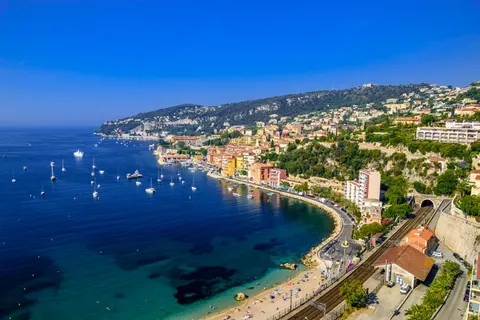
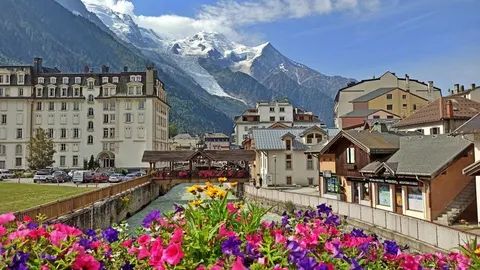
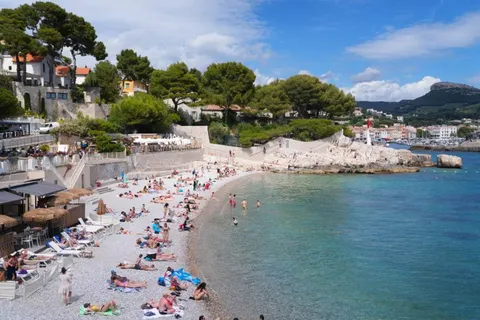
Other cities in France
Compare performance across markets – occupancy, nightly prices and seasonality for other destinations in France.

Calculate your earnings potential in Marseille
Discover how much more you could earn by optimizing your listings with ListingOK
Your listings
How do we achieve these results?
AI Dynamic Pricing
Occupancy Optimization
Market Analysis
24/7 Expert Support
In line with our best results!
Get your full report
Detailed analysis and personalized recommendations
* Calculations based on 30 days/month. Actual results may vary depending on market, season, property type, and implemented strategy.
Suggest a new city in France
Frequently asked questions about Airbnb occupancy in Marseille
Over the June 2025 to May 2026 analysis period, Marseille averaged 64% occupancy, equal to about 231 booked nights a year. That runs a few points above the French national average of roughly 61% across the thirteen cities we track, making Marseille a steady, high-occupancy market, though its nightly rates sit well below the high-priced Riviera towns nearby.
August and July are the peak months, driven by Mediterranean heat and full Calanques access. The real sweet spot is the May, June and September shoulder season: warm, dry weather, strong Calanques demand and the Mediterranean Season cultural programme (15 May to 31 October in 2026). December and January are the clear low season, when the beach season closes and leisure demand thins.
Yes. Every furnished tourist listing needs a registration number, now issued through the national platform with a 20 May 2026 deadline, and it must appear on all listings. Since 2025 a primary residence can be let for a maximum of 90 nights per year. A secondary residence requires change-of-use authorisation with compensation. Fines reach 10,000 EUR for breaching the 90-night cap.
The Vieux-Port and historic Le Panier are the most-requested bases, walkable to the fish market, the MuCEM and Calanques boat trips. Cours Julien and Notre-Dame du Mont draw younger travellers, while the southern Prado, Castellane and Corniche areas suit families and beach stays. Central or metro-connected units far outperform the residential northern arrondissements for visitor demand.