
Airbnb Occupancy Rate in Las Palmas de Gran Canaria, Spain, Data & Trends 2026
Curious about the performance of short-term rentals in Las Palmas de Gran Canaria, Spain? Over the last year, the average occupancy rate was 68% with an average nightly price (ADR) of 86€. Hosts earned on average 1646€ per month.

📩 Send me this report and get it in my inbox every month
90-day occupancy forecast for Las Palmas de Gran Canaria so you can update rates and stay ahead of competitors.
Market summary in Las Palmas de Gran Canaria
Key metrics to optimize your pricing strategy
Avg. monthly earnings
1646€
$1498 USD
YoY Revenue Change
5%
vs. previous year
Occupancy Rate
68%
~20 days/month
Average Daily Rate
86€
$78 USD
Seasonality Index
67%
demand variation
Best Months
January, March
peak season
Worst Months
May, June
low season
Revenue Management in Las Palmas de Gran Canaria
Our AI-powered platform automatically optimizes your rates. Maximize your revenue with intelligent dynamic pricing.
What Las Palmas de Gran Canaria's occupancy and nightly prices actually mean
Over the analysis period of June 2025 to May 2026, Las Palmas de Gran Canaria ran 67% average occupancy, about four points above the 63% Spanish city average in our dataset and 11th of 28 cities, while filling roughly 242 nights a year. That occupancy is the city's real strength; its average daily rate is not. ADR sits at 84€, well below the 122€ national average and near the bottom of the table at 23rd of 28, which reflects a capital-city, locals-and-long-stays market rather than a high-season resort.
The result is average monthly revenue of 1,608€ per listing, a moderate figure driven by volume of nights rather than headline rates. Year-on-year revenue growth is a modest 4%, and the seasonality index of 68% is one of the gentlest in Spain, confirming that the opportunity here is steady all-year occupancy and length-of-stay rather than squeezing a short summer peak. Hosts who lift rates should do so through better furnishing and remote-work readiness, not by gambling on a high season that this market does not really have.
Monthly Airbnb occupancy in Las Palmas de Gran Canaria
Average occupancy rate by month in Las Palmas de Gran Canaria, compared with the same month a year earlier.
| Month | Occupancy | Prior year |
|---|---|---|
| Oct 2025 | 64.5% | 67.8% |
| Nov 2025 | 82.7% | 88% |
| Dec 2025 | 76.9% | 80.6% |
| Jan 2026 | 80.4% | 83.2% |
| Feb 2026 | 82% | 84% |
| Mar 2026 | 74% | 75.9% |
| Apr 2026 | 57.2% | 58.2% |
| May 2026 | 51.3% | 54.9% |
| Jun 2026 | 58% | 56.7% |
| Jul 2026 | 65.6% | 63% |
| Aug 2026 | 68.9% | 66.5% |
Historical Airbnb occupancy in Las Palmas de Gran Canaria (last 12 months)
📌 Historical trends reveal seasonal highs – plan accordingly.
Airbnb occupancy forecast in Las Palmas de Gran Canaria (next 90 days)
These figures reflect real-time demand in Las Palmas de Gran Canaria, helping you plan and price strategically.
Why people book Airbnbs in Las Palmas de Gran Canaria
Las Palmas de Gran Canaria is unusual among Spanish coastal markets because it is a working capital city of roughly 380,000 residents, not a purpose-built resort, so Airbnb demand stays far steadier through the year than the mainland. The single biggest draw is Las Canteras, a 3-kilometre urban beach protected by a natural reef bar that keeps the water calm and pulls families and older guests right through the winter. On top of that sits a constant flow of northern Europeans escaping cold mainland winters, a large and growing population of digital nomads who use the city as a sub-tropical base, and maritime traffic through the Puerto de la Luz, including yacht crews staging trans-Atlantic crossings in autumn.
This blend of city-break, beach, remote-work and port demand is what gives the market its flat occupancy curve. Many guests are not here for two summer weeks but book three to six weeks between November and March, which rewards hosts who price for monthly stays and equip apartments for working travellers: fast wifi, a real desk and a proper kitchen matter more here than a sea-view balcony alone.
When Airbnb demand peaks in Las Palmas de Gran Canaria
Las Palmas inverts the usual Spanish pattern: its strongest months are January and November, and its weakest are May and June, when northern Europe warms up and the long-stay winter crowd goes home. The decisive event is the Carnival of Las Palmas de Gran Canaria, which in 2026 ran from 23 January to 1 March around Santa Catalina Park with the Queen's Gala, the Drag Queen Gala and the main parades; carnival weekends sell out apartments near the port and Las Canteras and let hosts hold premium nightly rates.
Beyond carnival, the Fiestas de San Juan in June (the city's foundation festival) and the autumn yacht-crossing season provide secondary bumps, while the consistently warm desert climate, near 21°C year-round, means there is no true dead season. The practical takeaway is to treat December through March as your high-rate window and use late spring as the time for maintenance, longer discounted bookings and minimum-stay relaxation rather than chasing empty nights.
Best neighbourhoods for short-term rentals in Las Palmas de Gran Canaria
For short-term rental the city splits into a few clearly different zones. The Las Canteras and Puerto/La Luz strip is the prime tourist area: walkable to the beach, the promenade and the ferry and cruise terminals, it commands the highest nightly rates and the easiest year-round fill, especially for studios and one-bedrooms. Vegueta and Triana, the historic core, suit guests who want museums, the cathedral, tapas streets and culture over sand; stays there skew toward city-break couples and shorter bookings.
Ciudad Jardín and the Mesa y López axis sit between the two, offering quieter residential streets, shopping and an easy walk to the beach, which appeals to longer-staying remote workers and returning winter guests. The hillside Ciudad Alta districts are cheaper to buy into but further from the water and the tourist flow, so they work better for monthly lets to business and relocation guests than for premium short stays.
Short-term rental rules in Las Palmas de Gran Canaria
Holiday lets in Las Palmas are governed by the Canary Islands' tourist-housing regime (vivienda vacacional, VV), which changed substantially with Law 6/2025 of 10 December 2025 on the sustainable ordering of tourist use of dwellings, published in the official gazette that month. The new framework moves authority to the municipalities and replaces the old free-registration model with urban-planning control: town halls can cap the share of residential buildable area used for tourist lets (a 10% ceiling, 20% on greener islands), and once a zone hits its cap no new licences are issued until the figure falls.
Under the new rules licences must be renewed every five years, and properties have to progressively meet minimum-size, energy-efficiency and accessibility standards. Existing registered VVs get a transitional period but must comply on renewal. Practically, anyone buying or onboarding a Las Palmas apartment for Airbnb should confirm the unit already holds a VV registration and check the municipal zoning status before committing, because in capped central zones a new licence may simply be unavailable.
Tools & strategies for Las Palmas de Gran Canaria
Revenue Management in Las Palmas de Gran Canaria
We help you increase revenue in Las Palmas de Gran Canaria with pricing algorithms and active monitoring.
Learn moreDynamic Pricing in Las Palmas de Gran Canaria
Our engine auto-adjusts prices based on demand and local events in Las Palmas de Gran Canaria.
Learn moreChannel Manager in Las Palmas de Gran Canaria
Manage listings on Airbnb, Booking.com and Vrbo in one place across Las Palmas de Gran Canaria.
Learn moreCheck your Airbnb in Spain
And around the world
Other cities in Spain
Compare performance across markets – occupancy, nightly prices and seasonality for other destinations in Spain.

Madrid
72%
Barcelona
73%
Valencia
71%
Seville
67%
Malaga
75%
Murcia
63%
Palma
68%
Alicante
70%
Bilbao
64%
Córdoba
52%
Vigo
58%
A Coruña
60%
Granada
59%
Jerez de la Frontera
48%
San Sebastián
62%
Santiago de Compostela
56%
Lugo
49%
Torrevieja
62%
Estepona
63%
Benidorm
63%
Torremolinos
75%
Vilanova i la Geltrú
64%
Cuenca
53%
Dénia
58%
Los Realejos
67%
Santa Pola
70%
Inca
60%
Altea
61%
Nerja
67%
Santa Úrsula
67%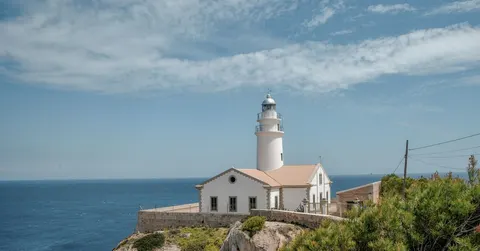
Capdepera
56%
Arico
65%Ribamontán al Mar
48%Calculate your earnings potential in Las Palmas de Gran Canaria
Discover how much more you could earn by optimizing your listings with ListingOK
Your listings
How do we achieve these results?
AI Dynamic Pricing
Occupancy Optimization
Market Analysis
24/7 Expert Support
In line with our best results!
Get your full report
Detailed analysis and personalized recommendations
* Calculations based on 30 days/month. Actual results may vary depending on market, season, property type, and implemented strategy.
Suggest a new city in Spain
Frequently asked questions about Airbnb occupancy in Las Palmas de Gran Canaria
Over the June 2025 to May 2026 analysis period, listings averaged 67% occupancy, roughly four points above the 63% Spanish city average and 11th highest of the 28 cities we track, filling about 242 nights a year. Crucially, that occupancy stays high through winter rather than peaking only in summer, so the city offers steadier year-round fill than most Spanish markets.
Demand peaks in January and November and dips in May and June, the opposite of mainland Spain. The Carnival (23 January to 1 March in 2026) is the strongest stretch, when apartments near the port and Las Canteras sell out at premium rates. Treat December through March as your high-rate window and use late spring for maintenance and discounted longer stays.
Yes. You need a Canary Islands vivienda vacacional (VV) registration, now governed by Law 6/2025 of December 2025. Authority has shifted to the municipality, which can cap the tourist-use share of a zone (10%), refuse new licences once a cap is reached, and require five-year renewals meeting size, energy and accessibility standards. Confirm an existing VV registration and the zoning before buying.
Las Canteras and the Puerto/La Luz strip command the highest rates and easiest year-round fill thanks to the beach, promenade and terminals. Vegueta and Triana suit culture-focused city breaks, while Ciudad Jardín and Mesa y López draw longer-staying remote workers. The hillside Ciudad Alta districts are cheaper but further from the water, better for monthly lets than premium short stays.